It's 10 a.m. The curtains aren't helping, and your head has its own heartbeat. You want one thing: a number.
So, how long does a hangover last? For most people, somewhere between 8 and 24 hours. In one study of 811 young adults, the average was 18.4 hours from the last drink until symptoms were fully gone. Translation: probably until tonight, with the worst of it landing when your blood alcohol level drops back to zero.
A big night can stretch that. A few popular fixes do too. Here's the hangover timeline, what actually helps, and when it's time to talk to a clinician. No lecture, promise.
How long does a hangover last?
Timing varies. The National Institute on Alcohol Abuse and Alcoholism (NIAAA) says symptoms peak around the time blood alcohol returns to zero and can last 24 hours or longer.
After a heavy night of drinking, it usually looks like this:
| Time since your last drink | What it usually feels like |
|---|---|
| 0 to 6 hours | Asleep or still buzzed. Blood alcohol level falling. |
| 6 to 12 hours | The wake-up wall: headache, thirst, nausea, light sensitivity. |
| 12 to 18 hours | Peak or plateau. Foggy thinking and an uneasy, anxious edge. |
| 18 to 24 hours | Easing. Tired but functional. |
| 24 to 72 hours | Heavy or back-to-back nights only: lingering fatigue. |
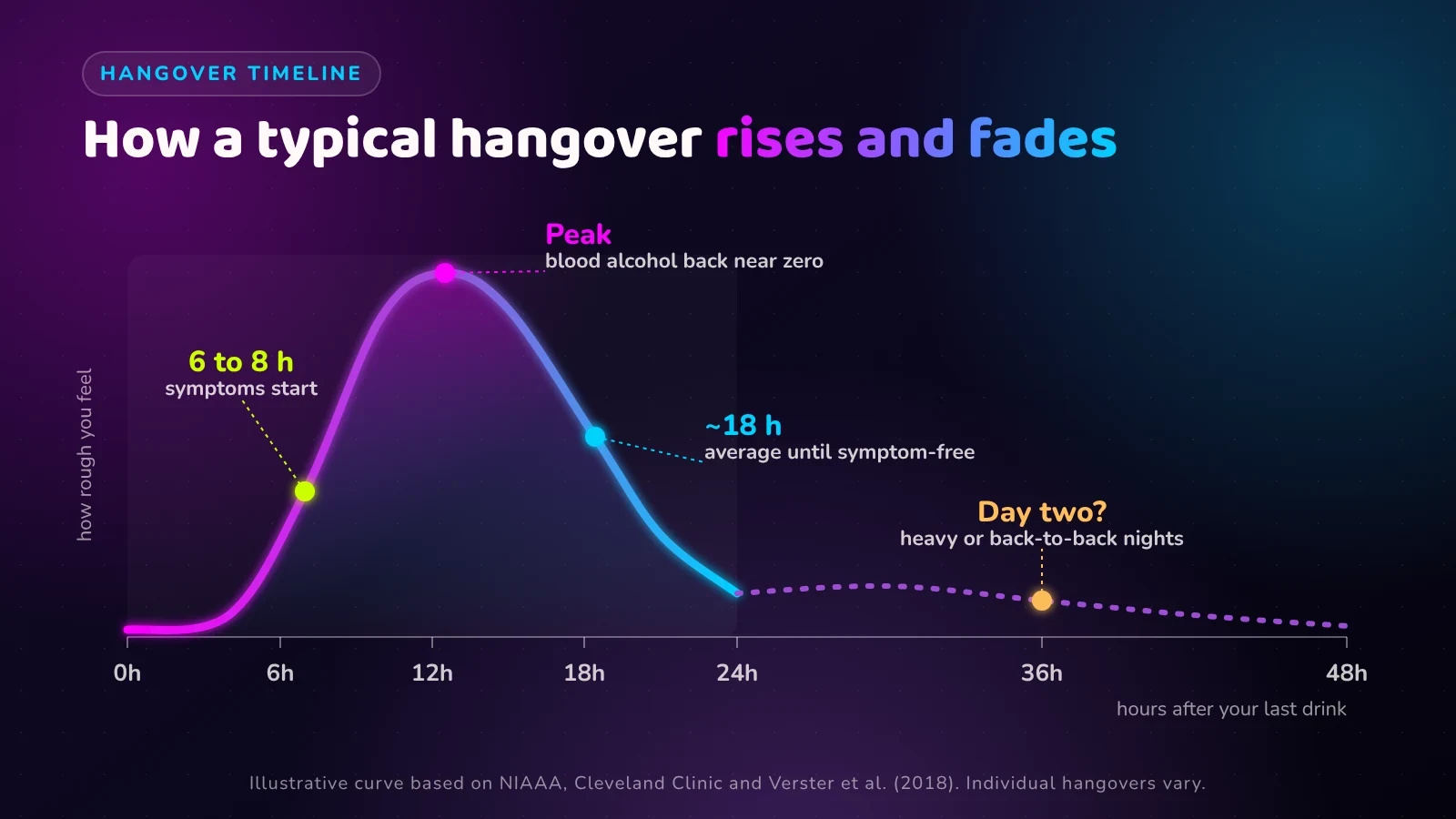
Not every hangover follows the same curve. When researchers asked 727 people to rate their latest hangover through the day, about 55% felt steadily better hour by hour. Around 19% felt equally rough all day. And 22% got worse before they got better.
Why some hangovers last longer than others
Same party, very different mornings. Here's what decides whether you're fine by lunch or still wrecked on Sunday.
How much and how fast you drank
Alcohol clearance varies from person to person. A drink-per-hour rule cannot tell you when you are sober or safe to drive. Binge drinking, which the NIAAA defines as about 4 drinks for women or 5 for men within two hours, pushes your blood alcohol level to 0.08% or higher. More alcohol in, longer hangover out.
Switching between beer and wine isn't the real problem, by the way. The total amount of alcohol is.
The sleep you didn't get
Alcohol helps you fall asleep, then wrecks the second half of the night. You lose REM sleep and tend to wake up early and wired. A 3 a.m. bedtime plus a 7 a.m. alarm stacks sleep debt on top, and that tiredness is often what lingers into day two.
Dark drinks and congeners
Congeners are fermentation by-products that give darker drinks their color. In a Brown University study of 95 heavy drinkers, people who had bourbon reported worse hangovers than those who had the same amount of vodka. Red wine and whiskey carry more congeners than vodka or light beer.
Still, alcohol itself does most of the damage. Clear spirits do not prevent hangovers or make heavy drinking safe.
An empty stomach, your age and your meds
Drinking on an empty stomach means alcohol hits your bloodstream faster. Some medications interact with alcohol, so check the label or ask a pharmacist.
Age is the surprise. A Danish survey of more than 50,000 adults found hangovers became less common with age, not more.
What's going on in your body
Alcohol doesn't cause one problem. It causes several small ones that land at once.
Dehydration. Alcohol is a diuretic. It blocks vasopressin, a hormone that helps your kidneys hold on to water, so you pee more and wake up thirsty.
Acetaldehyde. Your liver breaks alcohol down into acetaldehyde, a toxic, short-lived by-product linked to a racing pulse and sweating.
Inflammation. Alcohol nudges your immune system into an inflammatory response. That inflammation may explain the achy, flu-ish feeling.
An irritated gut. Alcohol ramps up stomach acid, which drives nausea.
Low blood sugar. Drinking can pull your blood sugar down, which adds shakiness to your other symptoms.
The rebound. As alcohol wears off, your nervous system overcorrects. That's a big part of next-day anxiety, and it's a tiny version of withdrawal.
What actually helps a hangover
Bad news first. The NIAAA is blunt: there's no cure for a hangover other than time. A 2021 review in the journal Addiction looked at 21 placebo-controlled trials and rated the evidence as very low quality. Nothing has been shown to fix symptoms once they've started.
What you can do is make recovery easier. This is the plan we'd give a friend:
- Sip water first. Small, steady sips beat chugging when nausea hits. Good hydration looks like pale-yellow pee.
- Add electrolytes if you've been sweating or vomiting. Sports drinks, Pedialyte or broth all work, and after a hot festival day they make a real difference to hydration.
- Eat something bland. Toast or crackers settle a stomach irritated by alcohol.
- Choose your painkiller carefully. Alcohol with acetaminophen can harm the liver; ibuprofen and aspirin can irritate the stomach. Ask a pharmacist what is appropriate for you.
- Keep coffee to your usual amount. A normal cup of coffee heads off a caffeine-withdrawal headache. More caffeine can rattle a brain already jittery from alcohol.
- Go back to bed. Rest is the most underrated part of hangover recovery. Nap without guilt.
Keep hydration in perspective: the NIAAA notes research hasn't tied electrolyte levels to hangover severity. That's why we're skeptical of pricey IV drips for an average hangover. They speed up hydration, but they don't clear acetaldehyde or give back lost sleep, so recovery still takes time.
Hangover remedies that waste your morning
Hair of the dog. More alcohol can mute symptoms for an hour. Then the hangover comes back, and the NIAAA notes it can prolong the misery. If morning drinking is becoming a habit, that's worth noticing.
A greasy breakfast. Eating helps. Grease isn't magic. Eating before you start drinking does far more.
Sweating it out. A hard workout on top of dehydration just adds dizziness. Walk instead.
Pills that promise to block hangovers. That 2021 review found only weak hints for a few ingredients, like clove extract, all taken before or during drinking. Most hangover remedies sold online are marketing, not medicine.
When it's more than a hangover
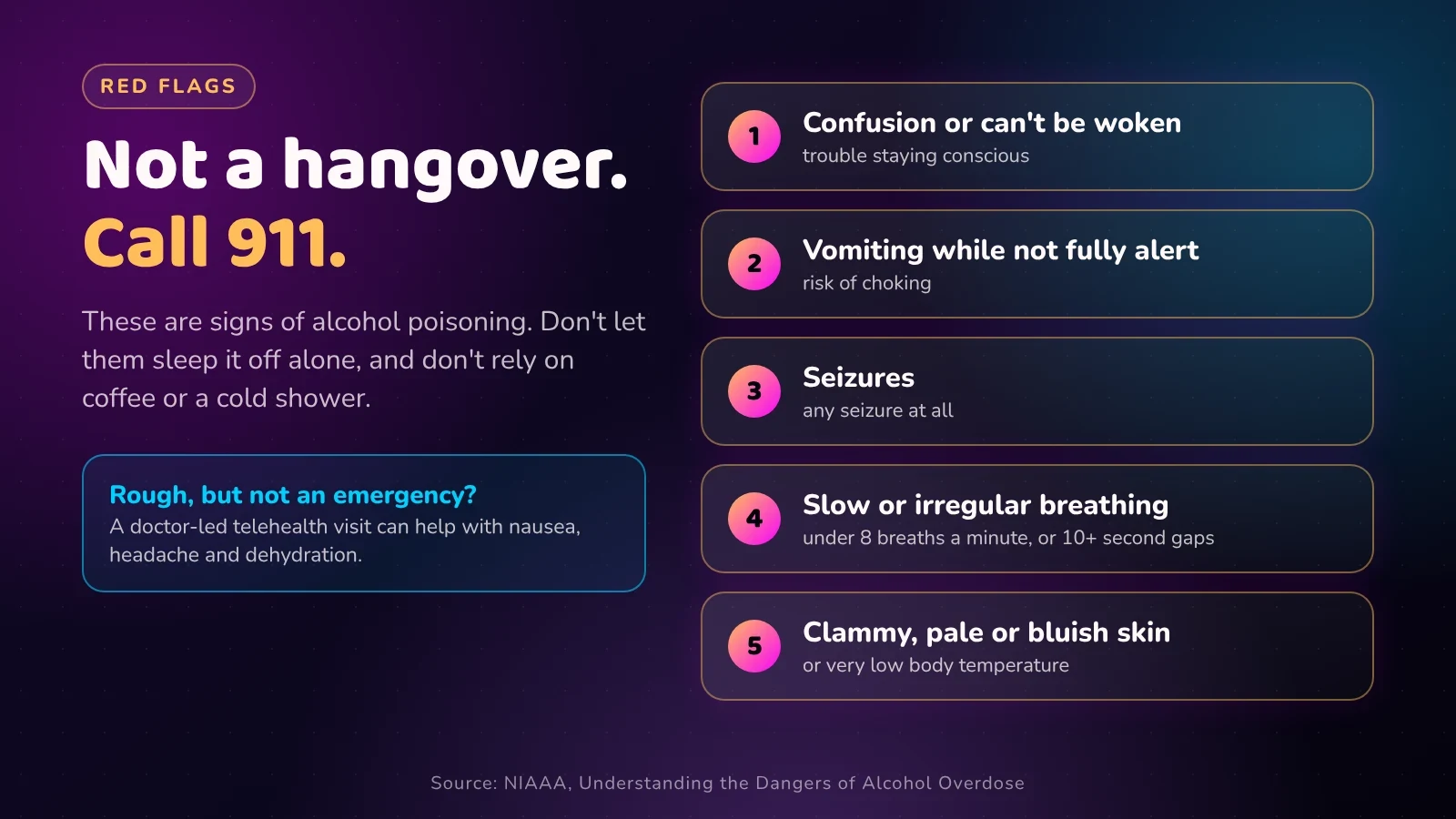
A hangover can impair driving and coordination. Alcohol poisoning is a medical emergency. Call 911 right away if someone who's been drinking shows any of these signs of alcohol poisoning:
- Confusion, or they can't stay awake or be woken up
- Vomiting while not fully alert
- Seizures
- Slow breathing (fewer than 8 breaths a minute) or gaps of 10 seconds or more between breaths
- Clammy, pale or bluish skin
Don't leave them to sleep it off alone.
Chest pain or a sudden, severe headache needs emergency care now. If you cannot keep fluids down or feel faint when you stand, get urgent in-person assessment. Shakiness, sweating and anxiety when you stop drinking may be withdrawal, which can become serious and needs prompt medical help.
If hangovers are getting more frequent, or a long one has you wondering whether you have a drinking problem, that deserves a calm, no-shame conversation. Alcohol use disorder is common and treatable. SAMHSA's National Helpline (1-800-662-4357) is free, confidential and open 24/7.
For the non-emergency side of a rough morning after, JellyMed has your back. Start a $45 doctor-led telehealth visit, tell us what's going on, and a clinician will decide what fits online and what needs hands-on care. No shame. Prescriptions aren't guaranteed, and medication costs are separate.
Questions people ask about hangovers
Can a hangover last 2 or 3 days?
Most hangovers fade within 24 hours. After a very heavy night, back-to-back nights out or very little sleep, fatigue can linger for two days, occasionally three. If you feel worse instead of better after day one, or you get shaky every time you stop drinking, talk to a clinician.
Why does my hangover feel worse on day two?
For about one in five people, hangover symptoms build through the day before they ease. On day two, the culprit is usually sleep debt and missed meals catching up with you, not alcohol still in your system. Eat a real meal, drink water and protect tonight's sleep.
Do hangovers get worse with age?
No. In a Danish survey of more than 50,000 adults, hangovers became less common with age, possibly because older adults drink less alcohol at once. If yours feel longer lately, check your pour size, your sleep and any new medications before blaming your birthday.
Is hangxiety real?
Yes. Hangxiety is the anxious, on-edge feeling some people get the morning after drinking. As alcohol wears off, your brain rebounds from its calming effect, which can leave you jittery. It usually fades with the hangover, but if anxiety reliably follows drinking, bring it up with a clinician.
Can I take Tylenol for a hangover?
Ask a pharmacist or clinician before taking a painkiller after drinking. Alcohol with acetaminophen can harm the liver, and ibuprofen or aspirin can irritate the stomach. Taking them with food does not remove those risks.