It's 10 a.m. on day two. The tent is already an oven, your mouth feels like sandpaper, and the headliner you came for doesn't play for another nine hours.
Here's the short version. Electrolytes for hangover recovery won't erase a rough morning, but they do help with the part that comes from dehydration: the thirst, the dry mouth, some of the headache and that drained, wobbly feeling. At a festival, where you sweat for hours on top of drinking alcohol, electrolytes matter even more. Below you'll find what electrolytes can and can't do, plus which drinks deserve space in your bag. You'll also get a simple hydration plan that runs from the first set to the last.
Do electrolytes help a hangover? The honest answer
Partly. Anyone promising more is probably selling electrolytes by the tub.
A hangover isn't one problem. The National Institute on Alcohol Abuse and Alcoholism (NIAAA) describes it as a pile-up: mild dehydration, broken sleep, an irritated stomach, inflammation, and a toxic byproduct called acetaldehyde that your liver makes while it breaks alcohol down. NIAAA also notes that research hasn't linked electrolyte levels to how bad a hangover feels, and that only time truly cures one.
So why bother? Because the dehydration slice is real, and it's the one slice you can fix. Replacing fluids along with sodium and potassium can ease thirst, dizziness and some fatigue. It also gives your hydration a head start for another long day outside.
Think of electrolyte drinks as fluid replacement, not a hangover cure. NIAAA reports no evidence that adding electrolytes reduces hangover severity.
Why alcohol and festival heat drain you so fast
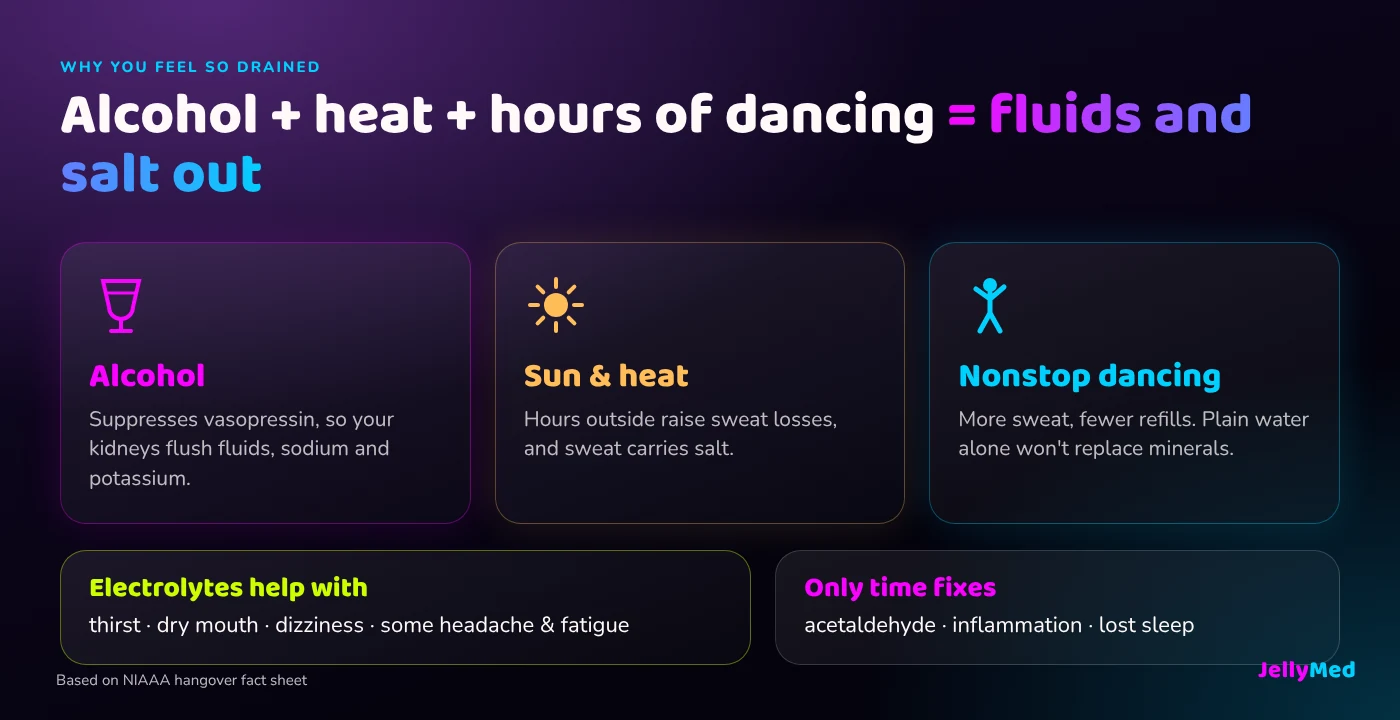
Alcohol switches off your water-saving hormone
Normally your brain releases vasopressin, a hormone that tells your kidneys to hang on to fluids. Alcohol suppresses it, so your kidneys stop saving and start flushing. That's what makes alcohol a diuretic: you pee out more fluids than you take in, and electrolytes like sodium and potassium leave with them. Vomiting stacks the losses up faster.
Meanwhile your liver is busy turning alcohol into acetaldehyde, which fuels inflammation in your gut, brain and other organs. No drink rinses that part away.
Sun, sweat and eight hours of dancing
Now take that same body to a festival. You're outside all afternoon, you're moving nonstop, and you're sweating out far more salt than you'd lose on a normal night at a bar. Plain water refills the tank but not the minerals, so your fluid balance drifts a little further off with every refill.
This is why a hangover after a long day outside can feel so much heavier. You're often dealing with alcohol and heat at the same time, plus the minerals you sweated away. Your electrolyte balance takes a hit from both directions. Hello, muscle cramps. Hello, pounding headache. And a kind of fatigue that a third iced coffee won't fix.
What electrolytes actually do
Electrolytes are minerals that carry an electric charge once they dissolve in your body's fluids. Your body uses these minerals to decide where water goes and to keep nerves and muscles working. When your electrolyte balance slips, you feel it fast.
- Sodium is the big one. It anchors your fluid balance by holding water in your bloodstream, so losing it shrinks your blood volume. That can drop your blood pressure and make you lightheaded when you stand up.
- Potassium works with sodium inside your cells and keeps muscle and heart rhythm steady.
- Chloride travels with sodium and helps hold your fluid balance in place.
- Magnesium supports muscle and nerve function. Low levels can show up as cramps or twitching.
- Calcium matters for muscle contraction too, though one night out rarely shifts calcium much.
For hangover recovery, the minerals that matter most are sodium and potassium, because those are the electrolytes alcohol and sweat pull out fastest. Magnesium comes next. Heavy drinking and heavy sweating can both nudge magnesium down, which is one reason cramps show up after a big day. You don't need megadoses of minerals. You need to replace what you lost.
There's one more player. A small amount of glucose helps your gut pull sodium and fluids in faster. That's the whole idea behind an oral rehydration solution, the formula the World Health Organization and UNICEF recommend for replacing fluid and salts lost through diarrhea. Too much sugar backfires, though. A soda isn't rehydration.
Best electrolytes for hangover recovery, compared
The best electrolyte drinks share two traits: real sodium and not much sugar. Here's how common electrolyte drinks compare per liter (about 34 oz), based on published labels and nutrition data.
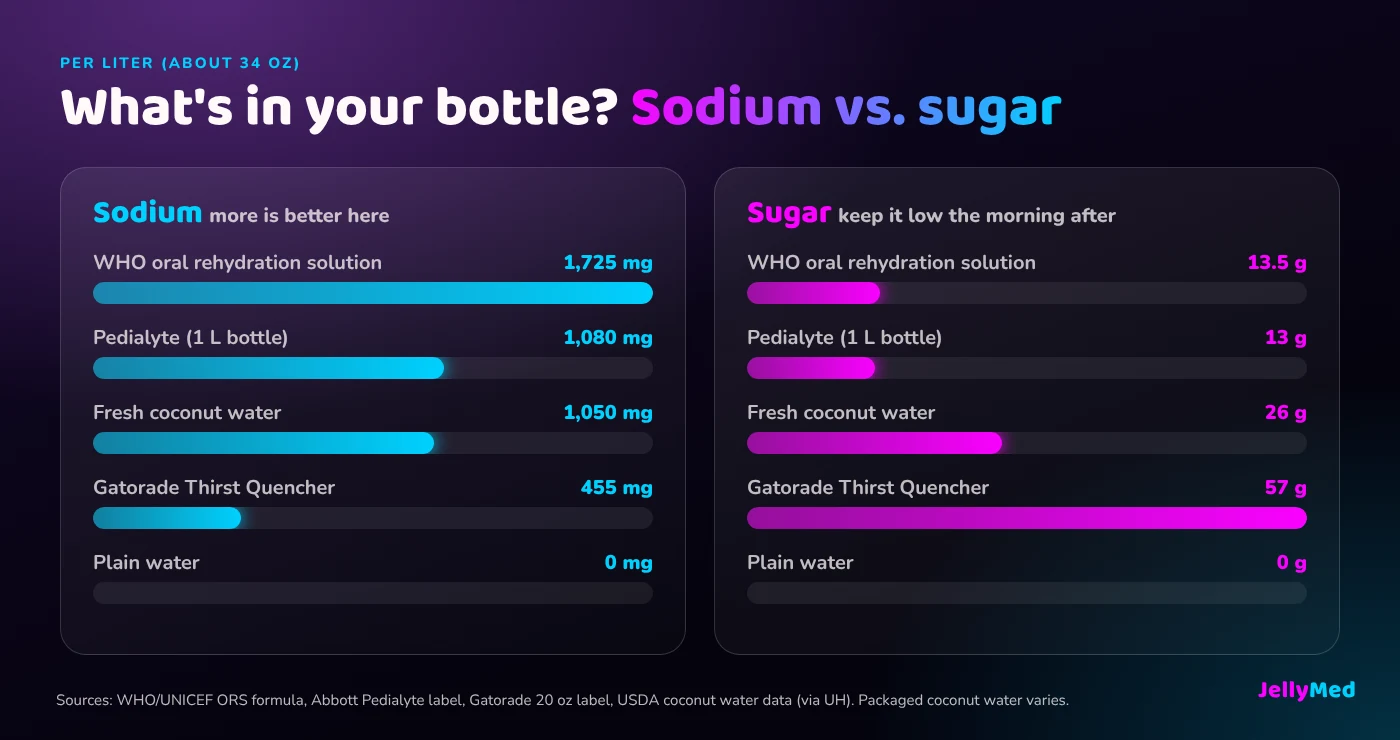
| Drink (per liter) | Sodium | Potassium | Sugar | Best for |
|---|---|---|---|---|
| WHO oral rehydration solution | about 1,725 mg | about 780 mg | 13.5 g glucose | Fluid and salt replacement; severe dehydration needs urgent care |
| Pedialyte, 1 L bottle | 1,080 mg | 780 mg | 13 g | Morning-after recovery |
| Gatorade Thirst Quencher | about 455 mg | about 135 mg | about 57 g | Mid-set energy, not recovery |
| Fresh coconut water | about 1,050 mg (packaged brands vary) | about 2,500 mg | about 26 g | Potassium boost |
| Electrolyte powder sticks | check the label | check the label | check the label | Packing light |
| Plain water | almost none | almost none | 0 g | All day, alongside food |
Formulas differ, so check the label and follow its mixing instructions. Oral rehydration solution replaces fluid and salts; severe dehydration needs urgent medical care.
Sports drinks were built for athletes burning through carbs. Gatorade carries roughly four times the sugar of Pedialyte with less than half the sodium. That's fine for fuel while you're dancing. It's not ideal when your stomach is already unhappy.
Coconut water is a good potassium source, but packaged versions vary a lot, so read the label. For any electrolyte powder, our rule of thumb is simple: look for a few hundred milligrams of sodium per serving or more, and go easy on sweeteners.
And plain water still counts alongside electrolytes. It just works best when you're also eating something salty.
Your festival hydration plan: before, during, after
Before the gates open
Good hydration starts at breakfast. Eat a real meal with some salt in it and drink a big glass of water. If the forecast is hot, add a serving of electrolytes. Check your pee before you leave camp. Pale yellow means you're starting in good shape.
During the sets
Alternate every alcoholic drink with nonalcoholic fluids, mostly water. Every couple of hours, swap that bottle for electrolytes, especially in direct sun. Sip, don't chug. Hydration out here is a steady drip, not a flood. Take shade breaks, and eat something every few hours so your stomach isn't running on beer alone.
Before you crash
Have a serving of electrolytes and a glass of water before you sleep. Not a gallon. Just enough to go to bed with your hydration topped up. Leave a bottle where you can reach it at 4 a.m. without hunting through the tent.
The morning after
Start your recovery with slow sips of electrolytes, especially if you feel queasy. Then add bland, salty food like crackers, broth or eggs, plus a banana for potassium. Keep your hydration going with plain water through the morning. A cup of coffee is fine if it's your routine, but caffeine won't cure anything, so match it with fluids. Hangover symptoms can last a full day, so give sleep and recovery time to catch up.
How to make an electrolyte drink at camp
Forgot your hydration sticks? The WHO's emergency sugar-and-salt recipe, needs three things:
- 1 liter (about 34 oz) of clean water
- 6 level teaspoons of sugar
- 1/2 level teaspoon of salt
Measure carefully. Too much salt is harmful, and the mix should taste no saltier than tears. A squeeze of orange or lemon adds flavor and a little potassium. Pre-pack these homemade electrolytes as a dry mix in small zip bags before you leave home.
Yes, you can drink too much water
More water is not always better. Too much fluid relative to sodium can cause hyponatremia, or dangerously low blood sodium. Headache, vomiting and confusion can be warning signs; seizures are an emergency.
We're not here to judge what's in your night. MDMA can cause dangerous overheating and low blood sodium. Neither water nor electrolyte drinks make it safe. Take breaks from dancing to cool down. Confusion, collapse, seizures or severe overheating need 911 and immediate help from the medical team; do not try to fix them by drinking more.
Symptoms of low blood sodium include headache, nausea, vomiting, confusion and seizures. Confusion or a seizure means emergency care, right away.
What else helps a hangover (and what doesn't)
Helps: sleep and time, backed by food and steady fluids. Rest is boring, but it's the only part of hangover recovery researchers agree on.
Be careful with: pain relievers. NIAAA warns that acetaminophen combined with alcohol can be toxic to the liver, and aspirin or ibuprofen can irritate a stomach that's already upset. If you need one, talk to a clinician first, and don't take acetaminophen while you're still drinking.
Doesn't help: "hair of the dog." More alcohol just tends to drag the hangover out. Cold showers and extra caffeine might wake you up for an hour. They won't speed recovery or fix fatigue from a short night.
What about IV drips? Most hangovers respond fine to oral fluids and electrolytes. An IV makes sense when you truly can't keep anything down, and that's a decision for a clinician.
When it's more than a hangover
Heat illness symptoms and hangover symptoms look a lot alike, and at a festival you can have both. Use the CDC's heat illness signs as your guide.
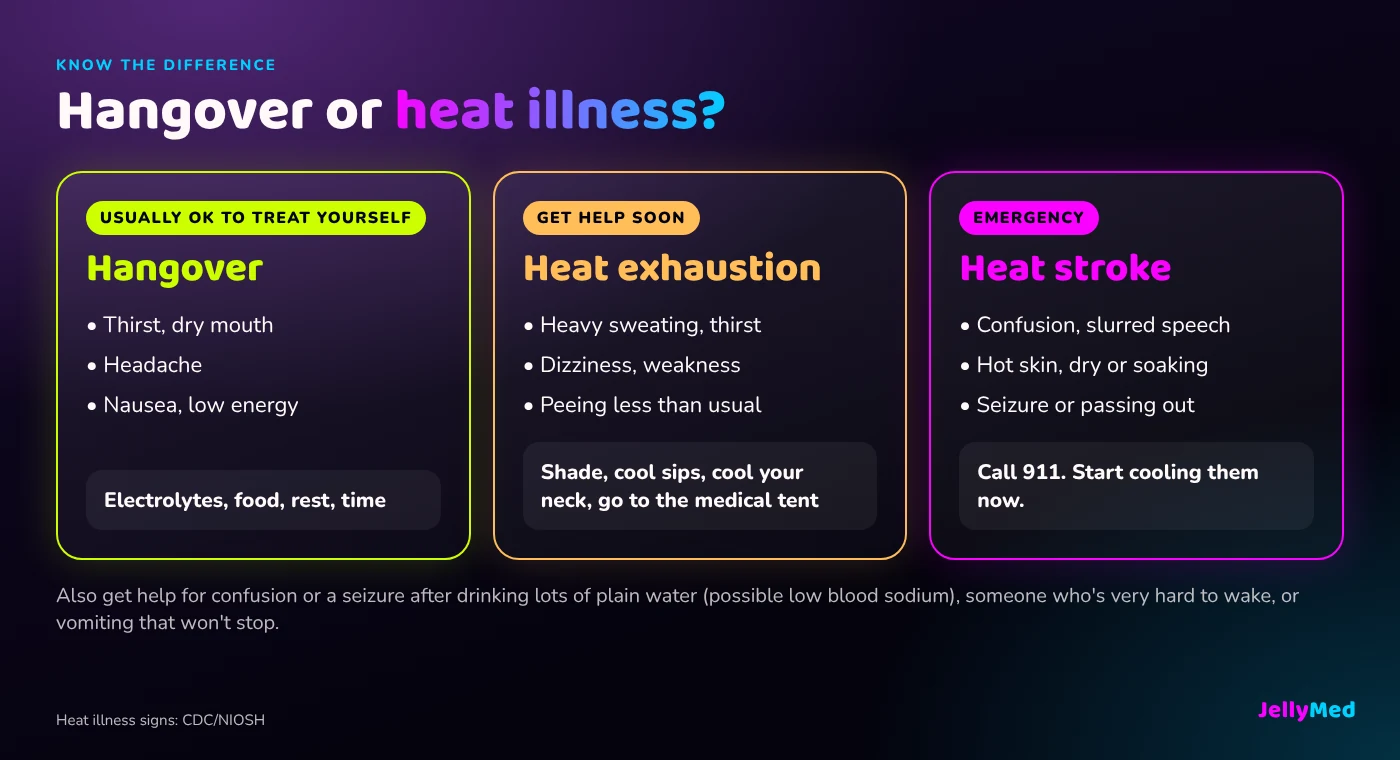
Heat exhaustion symptoms: headache, nausea, dizziness, weakness, heavy sweating, thirst and peeing less than usual. Get to shade, sip cool fluids, cool your face and neck, and head to the medical tent.
Heat stroke: confusion, slurred speech, hot skin (dry or soaking), seizures or passing out. This is an emergency. Call 911 and start cooling the person while you wait.
Also get help if someone can't keep fluids down for several hours, is very hard to wake, or keeps vomiting. Trust your gut. Festival medics would much rather see you early.
Feeling rough? JellyMed has your back
Sometimes you need more than electrolytes and a nap. JellyMed is doctor-led telehealth built for festival life, with a flat $45 visit (meds and labs extra) and a licensed clinician reviewing every request. Our heat + dehydration, headache and nausea consults are judgment-free. (JellyMed isn't emergency care, so call 911 for anything serious.)
Questions people ask about electrolytes for hangovers
Is it better to drink electrolytes before or after drinking alcohol?
No timing schedule has been shown to prevent a hangover. Replace fluids you lose, follow the drink's directions, and avoid forcing large amounts.
What's the best electrolyte for a hangover?
Sodium matters most for dehydration, since it's the mineral that holds water in your blood. Look for a drink close to an oral rehydration solution: plenty of sodium, some potassium and magnesium, and only a little sugar. A rehydration drink or a low-sugar electrolyte powder fits that pattern better than most sports drinks. Coconut water adds potassium, but its sodium varies a lot from brand to brand.
Is Pedialyte or Gatorade better for a hangover?
For the morning after, Pedialyte. Per liter it has more than twice the sodium of Gatorade and about a quarter of the sugar, which is easier on an upset stomach. Like most sports drinks, Gatorade is fine while you're dancing and need quick energy, but it's built for athletes, not hangover relief. Either beats skipping fluids entirely.
How fast do electrolytes work on a hangover?
Fluids start moving into your bloodstream quickly, and many people feel less thirsty and lightheaded within an hour or two. Headache and fatigue usually take longer, since they're tied to sleep loss and inflammation too. Sip electrolytes steadily over your recovery morning instead of chugging a liter at once.
Can electrolytes prevent a hangover?
No. Electrolytes have not been shown to prevent hangovers. They may help replace fluid and salts you have lost, but they do not erase alcohol's effects.